
Project: Mindful Meadowlands, a show garden at RHS Flower Show Sandringham, awarded a Bronze Medal
Client: Constructing Minds with Nature CIC
Location: Sandringham, Norfolk, relocating to Ascot Park
Overview
Mindful Meadowlands asks a question that is becoming harder to avoid on any landscape project. How do you design ground that copes with a changing climate and does something for the people who use it at the same time?
Designed by Constructing Minds with Nature and built by Archway Green, the garden answers it with three things working together: materials chosen for their environmental cost as well as their appearance, planting that earns its place ecologically, and a layout anyone can move through. It was awarded a Bronze Medal at RHS Flower Show Sandringham.
What sets the project apart is what happens next. Most show gardens are dismantled once the crowds have gone. This one is being relocated to Ascot Park, in partnership with Places for People and Gascoyne Estates, where it will stay as a permanent public asset rather than a fortnight of photographs.
The Brief
Constructing Minds with Nature is a not-for-profit landscape studio that creates green space in the public realm for community wellbeing, with a particular focus on disadvantaged communities and on mitigating biodiversity loss and climate change. All assets and profits are dedicated to the community interest.
Its designers, Carolyn Hardern, Jon Jarvis and Alan Nugent, bring more than eight decades of combined experience. Carolyn and Jon’s Constructing Minds Garden won RHS Best Show Garden at RHS Flower Show Tatton Park in 2023, and the pair returned to Tatton in 2024 with The 1804 Garden.
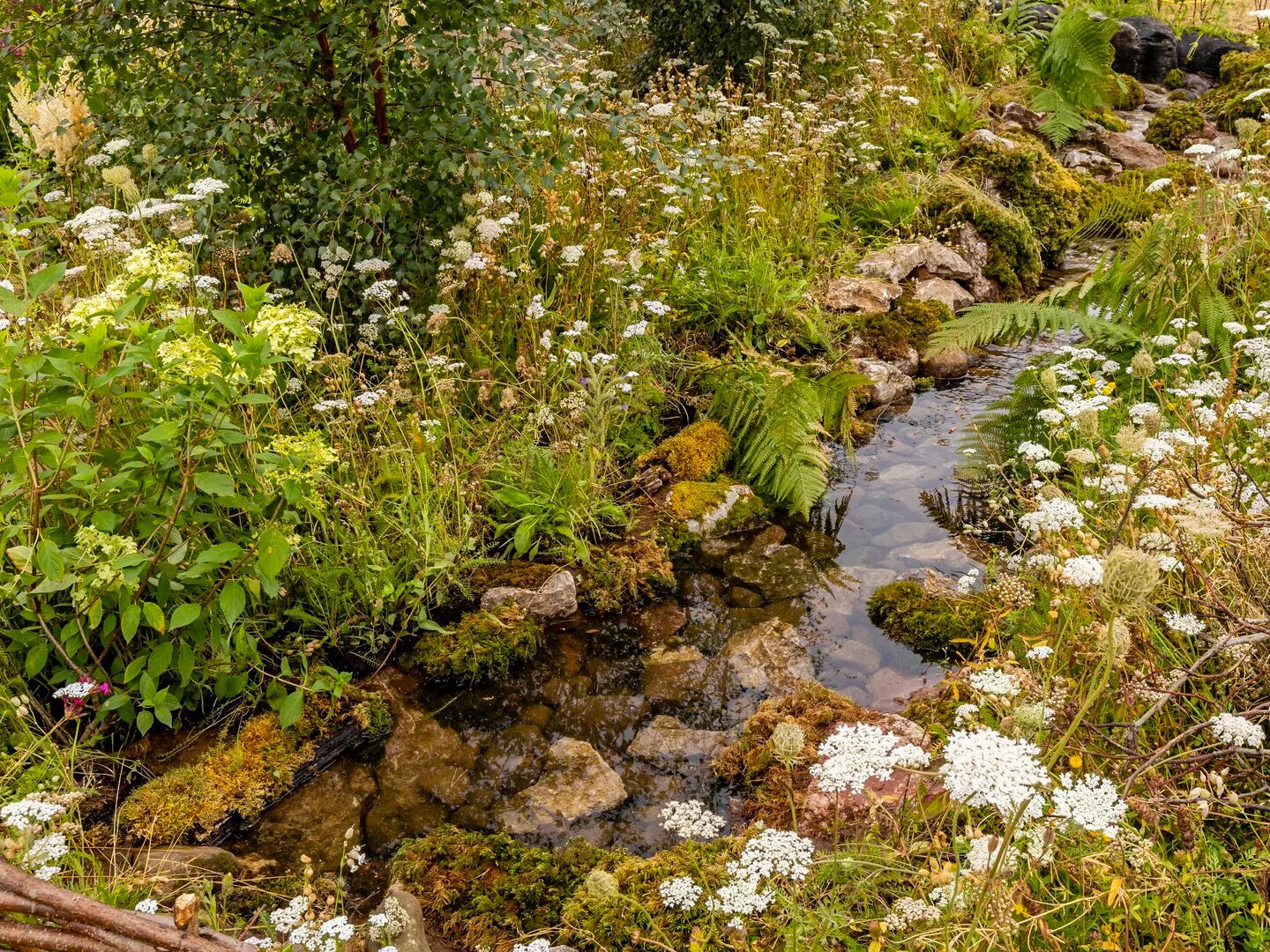
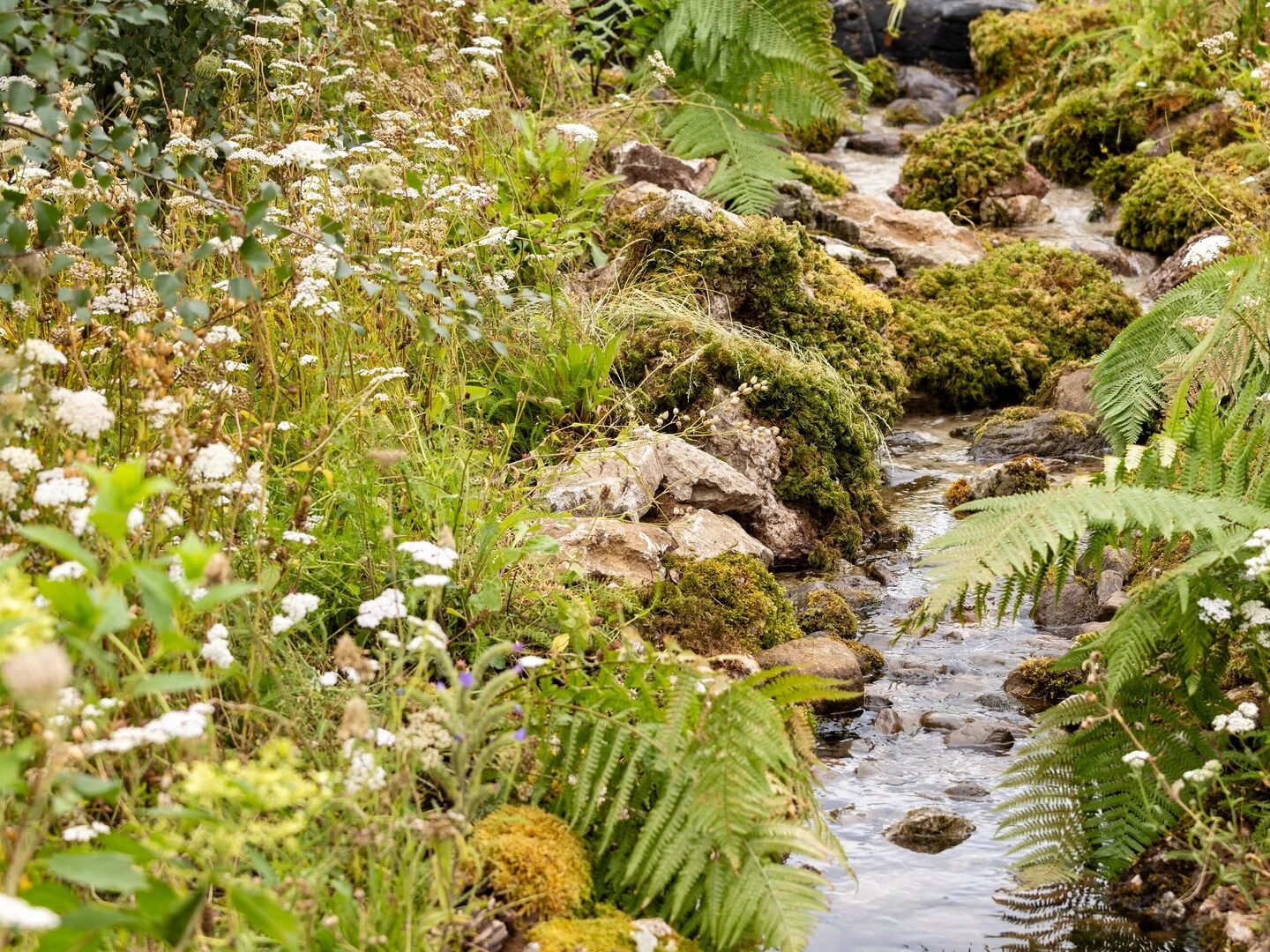
The brief for Mindful Meadowlands was to build a garden that responds to both sides of a changing climate at once. Waterlogged soils and flash flooding in one season, prolonged drought in another. It also had to be genuinely accessible, usable in wet weather as well as dry, and built to a standard that would survive being lifted and rebuilt on its permanent site.
Our Approach
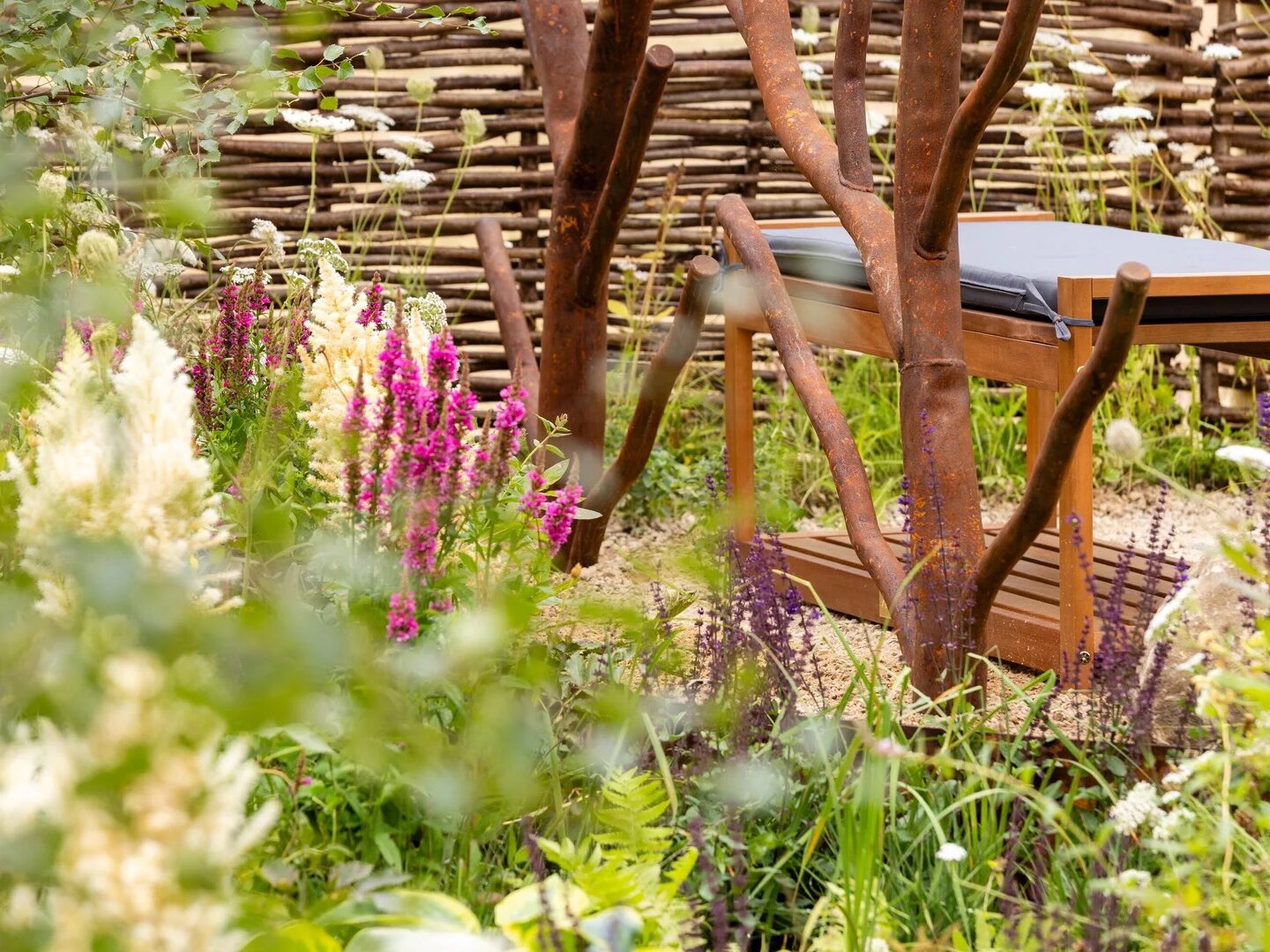
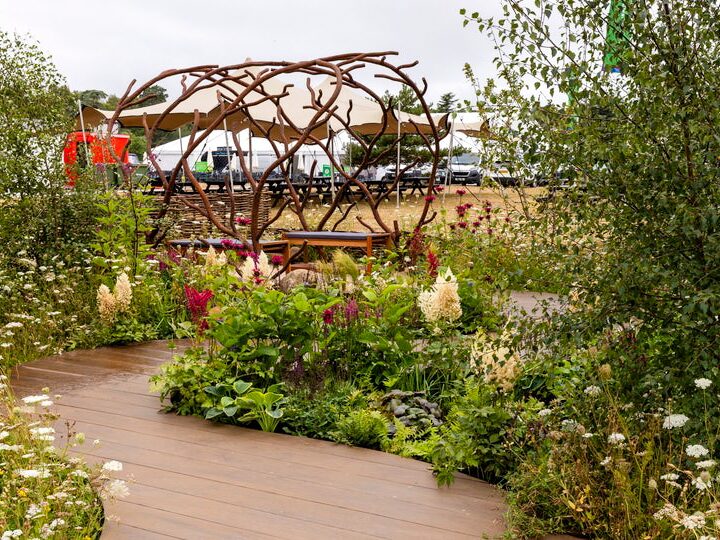
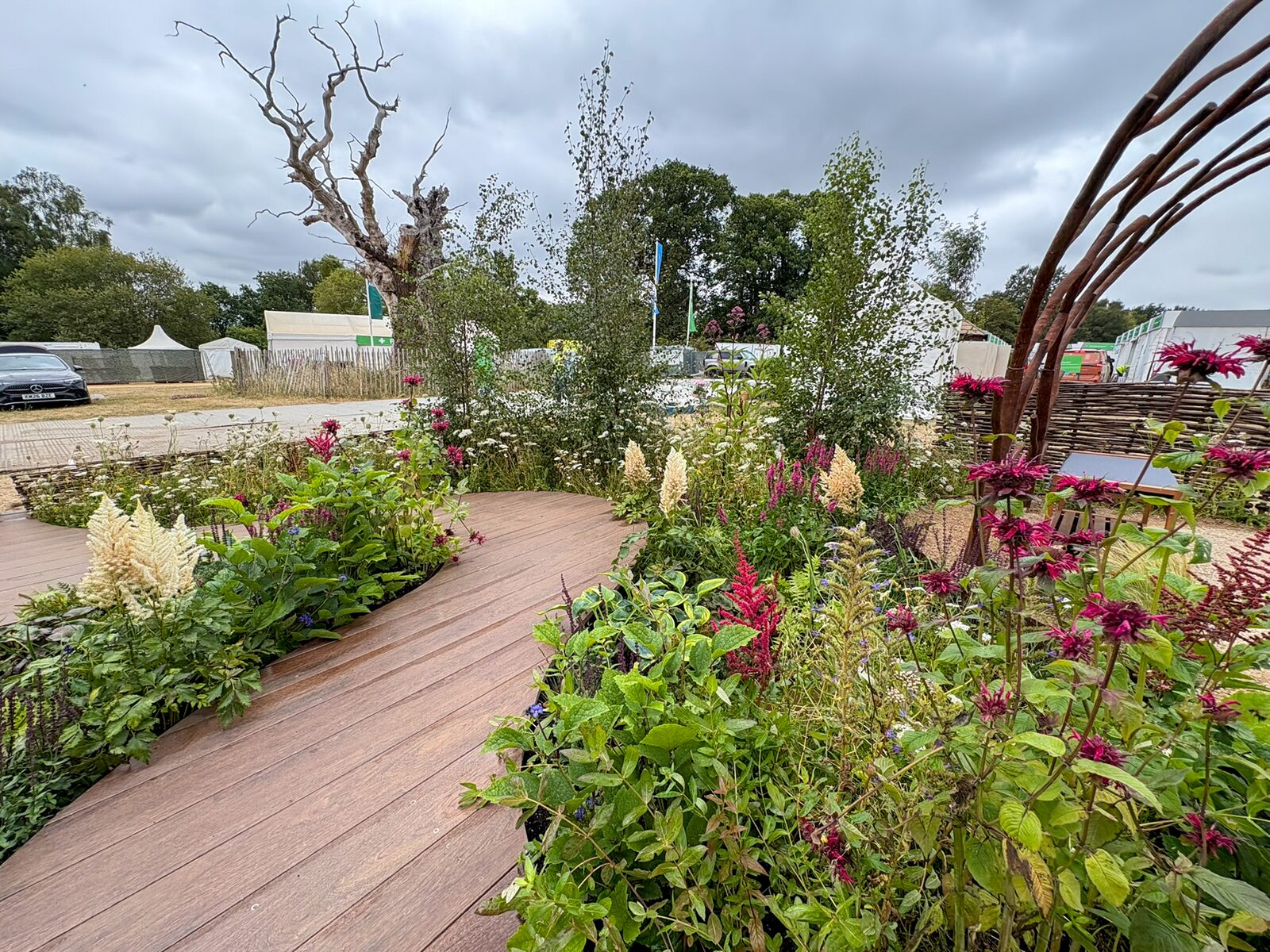
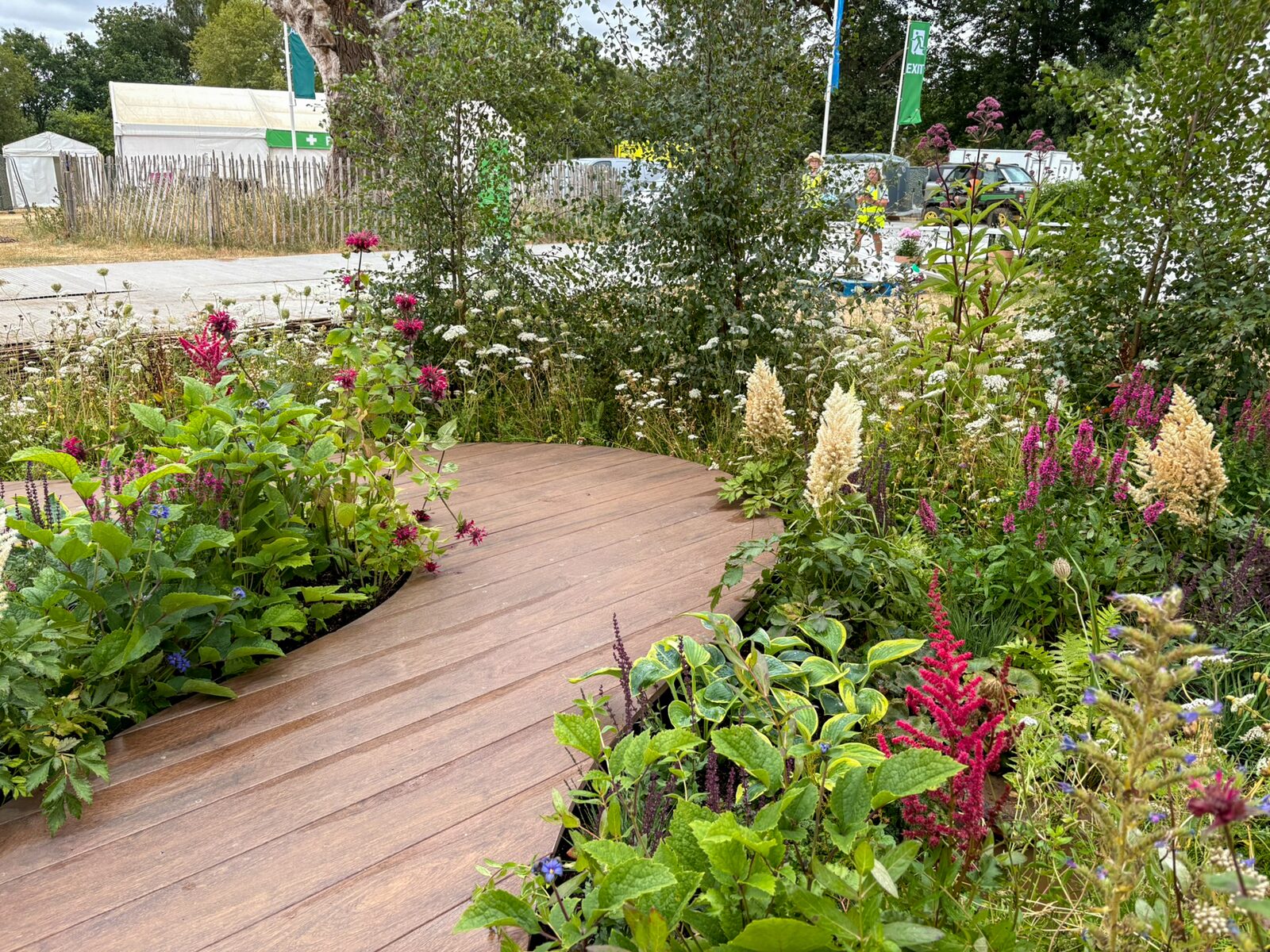
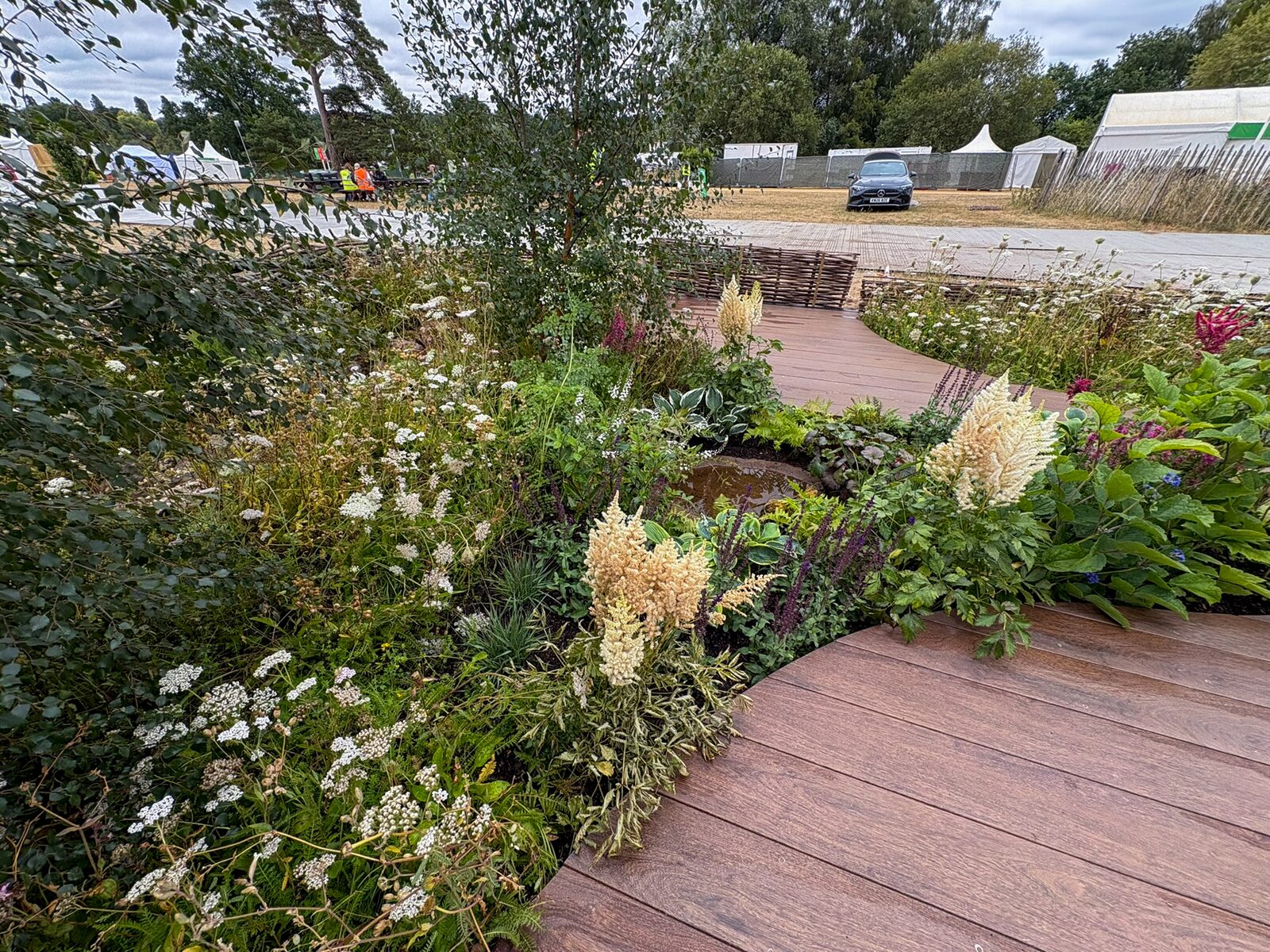
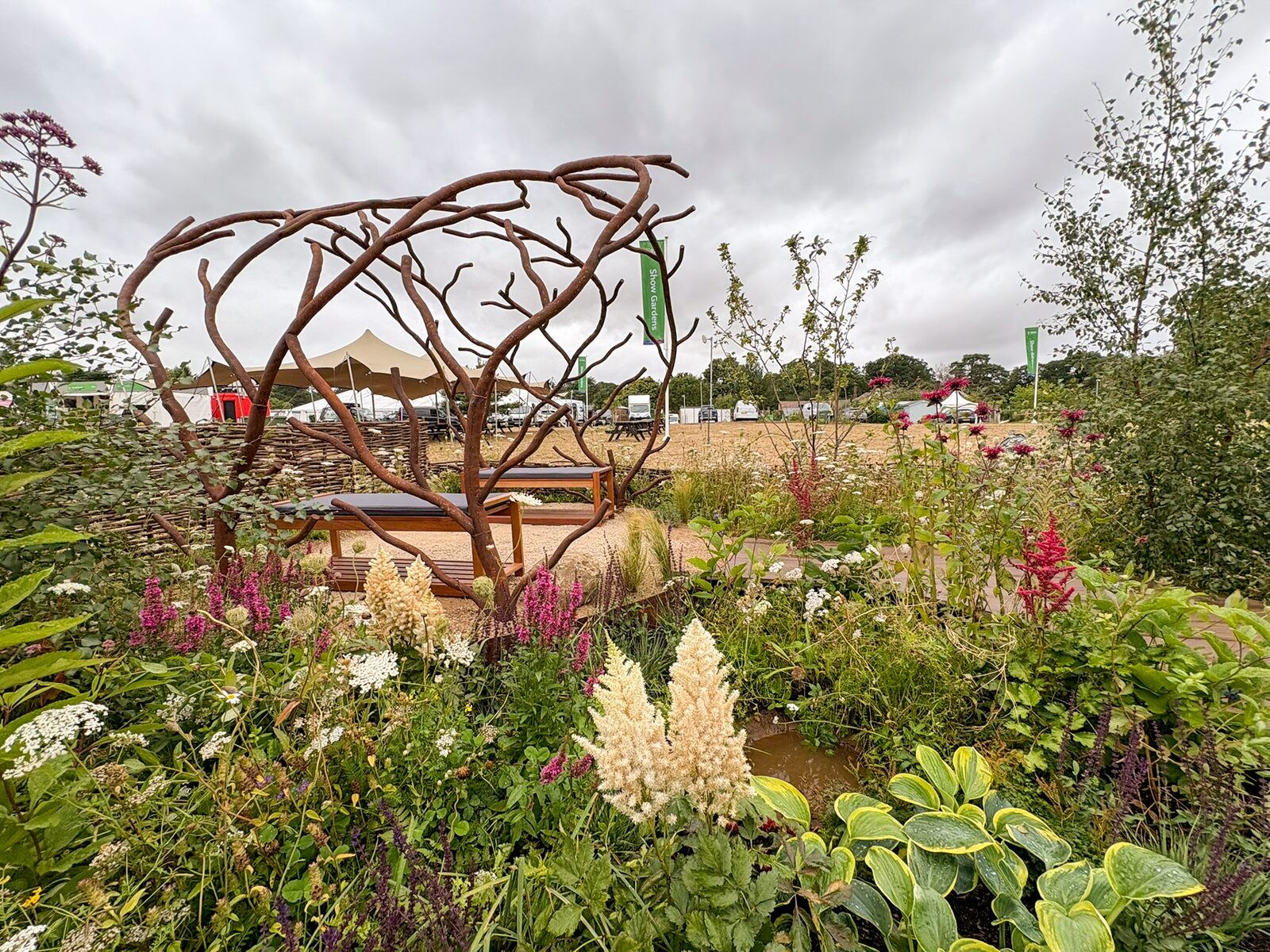
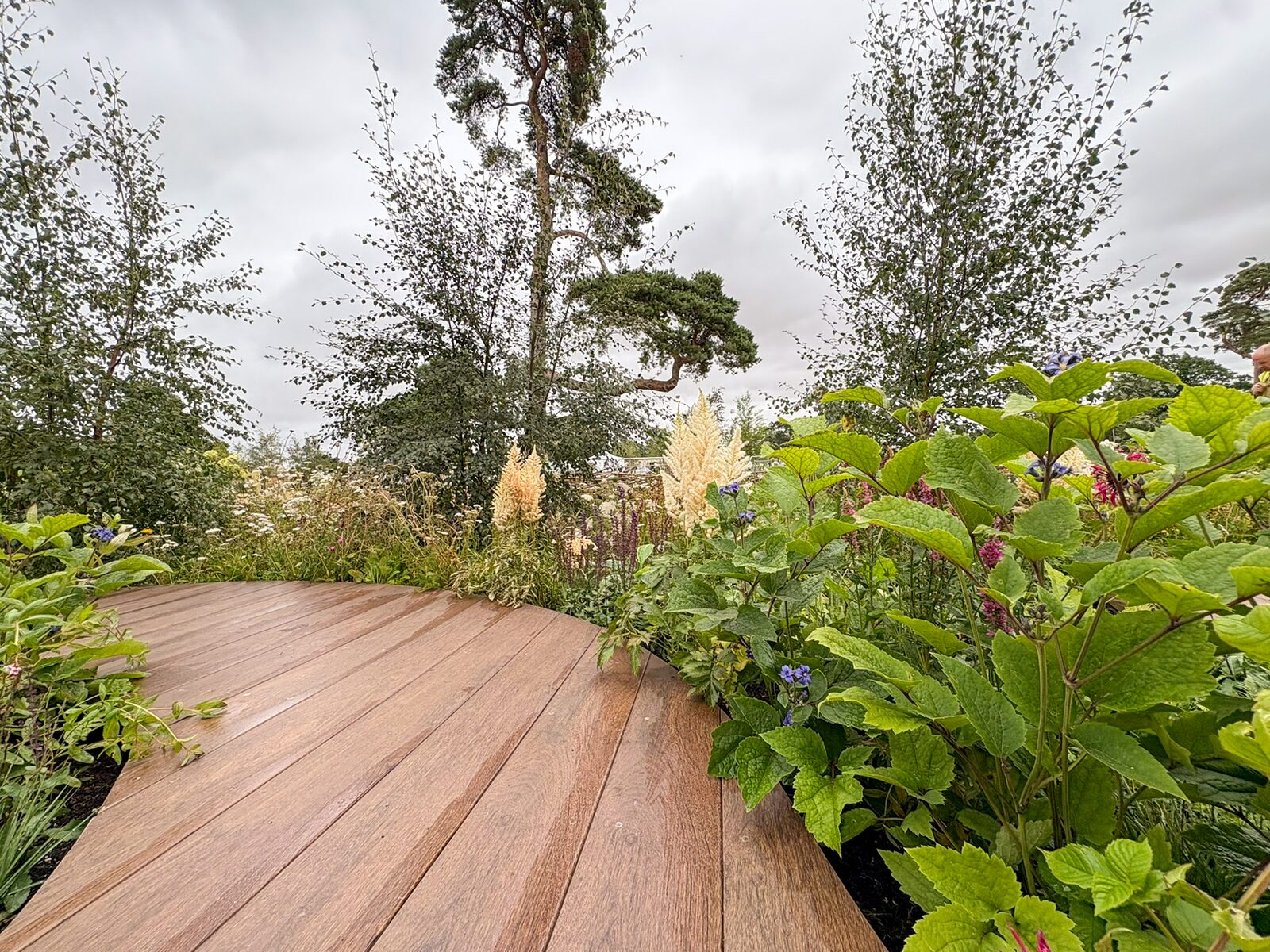
Sustainable materials. The boardwalk uses Pioneer Advanced Composite, made from a bamboo core mix and recycled plastic. It is wood free, so there is no deforestation behind it, and its built-in antibacterial properties resist odours, mould and allergens without chemical treatment. Manufacturing is solar powered, which keeps emissions and material waste down from the outset. Crushed gravel was chosen for the pathways for its drainage qualities, letting water through rather than shedding it onto the surrounding ground.
Accessible design. Wheelchair-friendly gravel pathways run through the garden at ground level, with elevated walkways lifting visitors over the wettest ground. The point is that the garden stays open to everyone through the year, not only in the months when the soil happens to be dry.
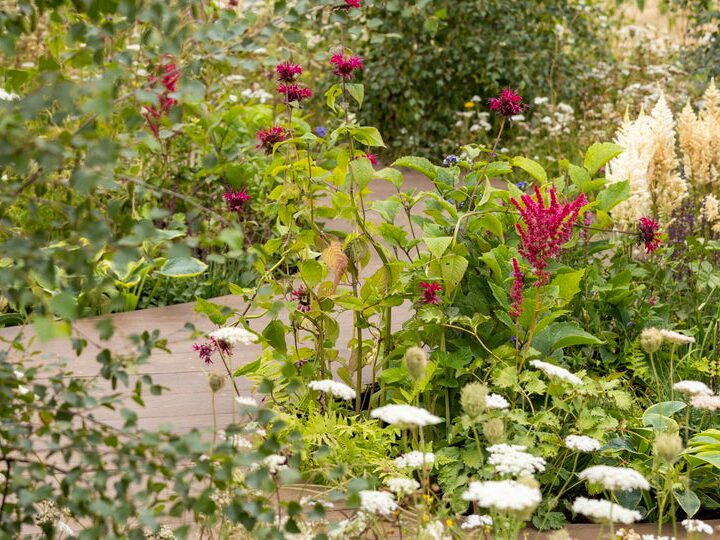
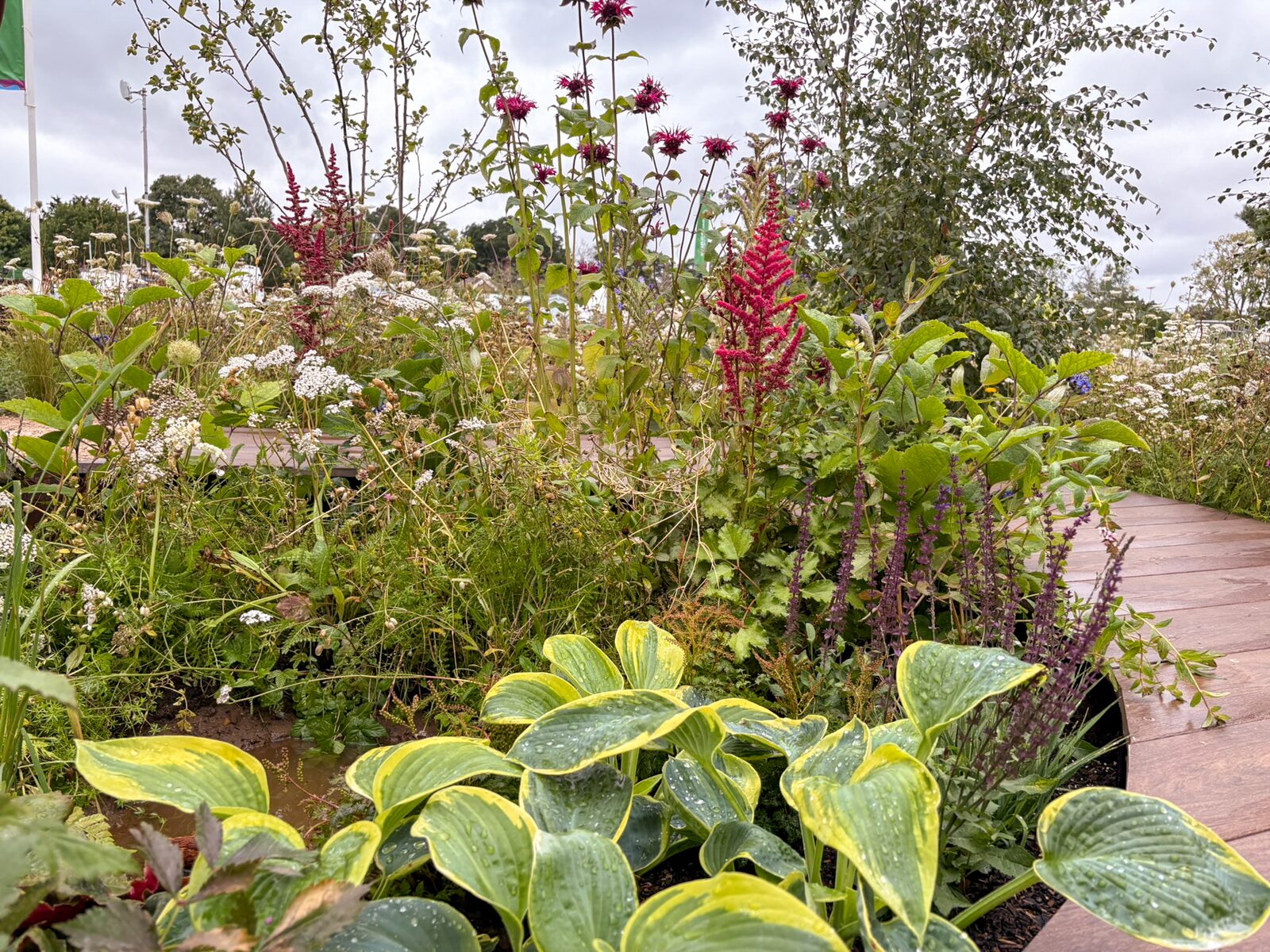
Functional planting. The palette is soft, blues, white and claret, chosen to settle the space rather than compete for attention. Behind that calm surface every plant is doing a job.
Betula pendula and Malus domestica were selected for their tolerance of waterlogged ground, bringing spring and autumn interest while playing their part in slowing flooding and capturing carbon.
The wildflowers are native species, feeding a wide range of insects through the season. They also make a case for wildflower meadows as something worth reinstating wherever there is room. Meadows have declined by 97% since the 1930s according to the National Trust, and a show garden is a useful place to remind people that the space to reverse that exists in ordinary landscapes as much as in nature reserves.
The legacy
After the show the garden moves to a development site at Ascot Park, a collaboration between Places for People and Gascoyne Estates. Gascoyne Estates manages the land and property interests of the Cecil family, who have owned and stewarded the Hatfield Park estate and the surrounding area for over 400 years, and takes a long-term approach to landownership built around sustainability, biodiversity and thriving communities.
It means the thinking behind Mindful Meadowlands carries on doing its work in a place where people live, which is the whole point of designing for wellbeing in the first place.